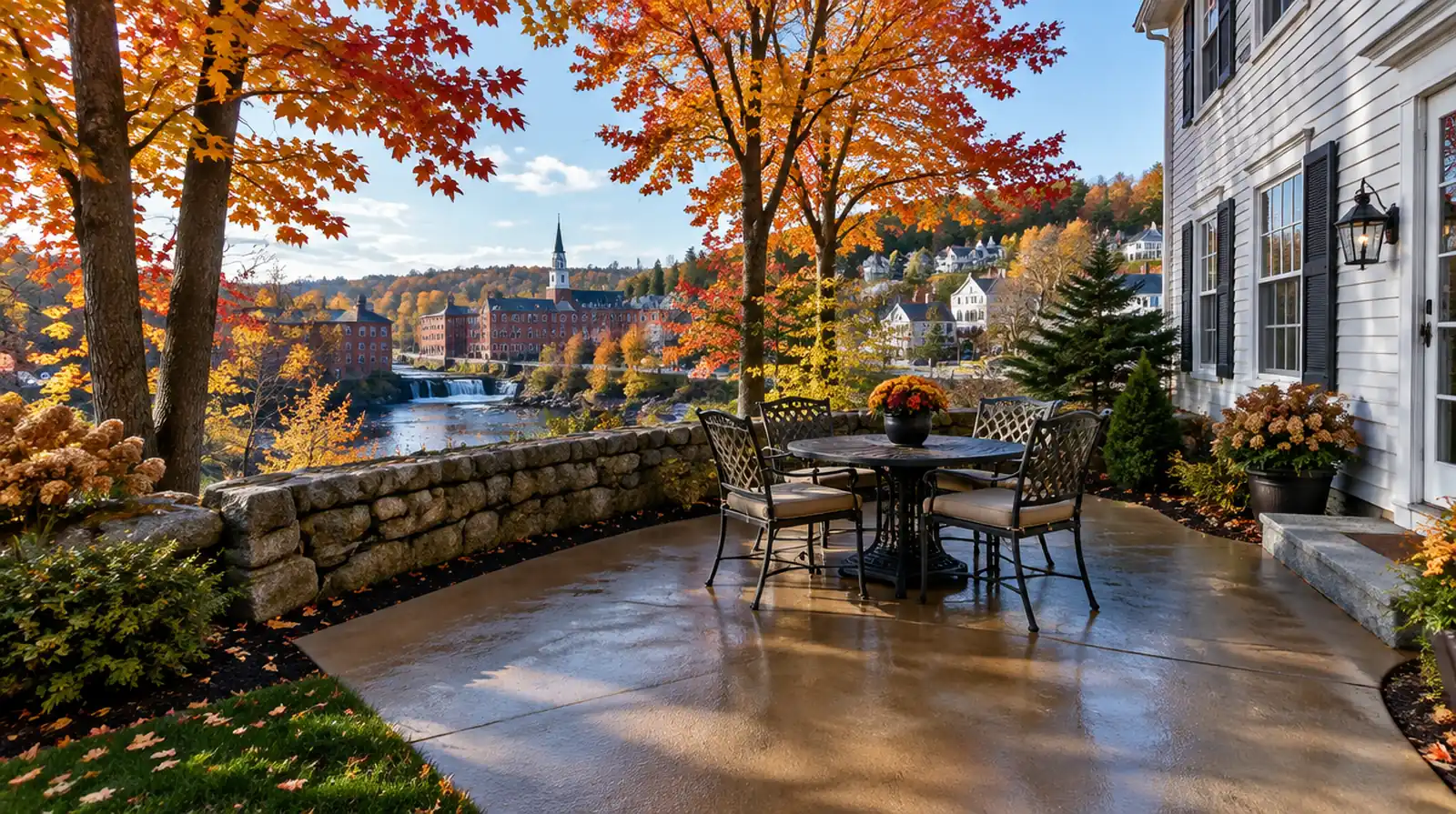
Why outdoor concrete needs protection
Front steps, walkways and patios get salted every winter, sit under snow for weeks and go through dozens of freeze-thaw cycles each season. Water and salt soak into unsealed concrete, freeze, expand and slowly break the surface apart. The result is scaling, where thin flakes pop off the top, and spalling, where larger pieces break away. Sealing slows that process by keeping water and salt from getting in. It also helps the concrete resist oil, leaves, rust and other stains.
Types of sealer
- Penetrating sealers: silane and siloxane products that soak into the concrete and repel water without changing its look. They are the best choice for salt protection on walks, steps and driveways.
- Acrylic sealers: film-forming sealers that add a satin or wet look and deepen color. They suit patios and stamped or decorative concrete.
- Polyurethane and epoxy: tougher films used mostly indoors or on covered porches.
We pick the sealer based on where the concrete is, how it is used and the look you want.
Cleaning before sealing
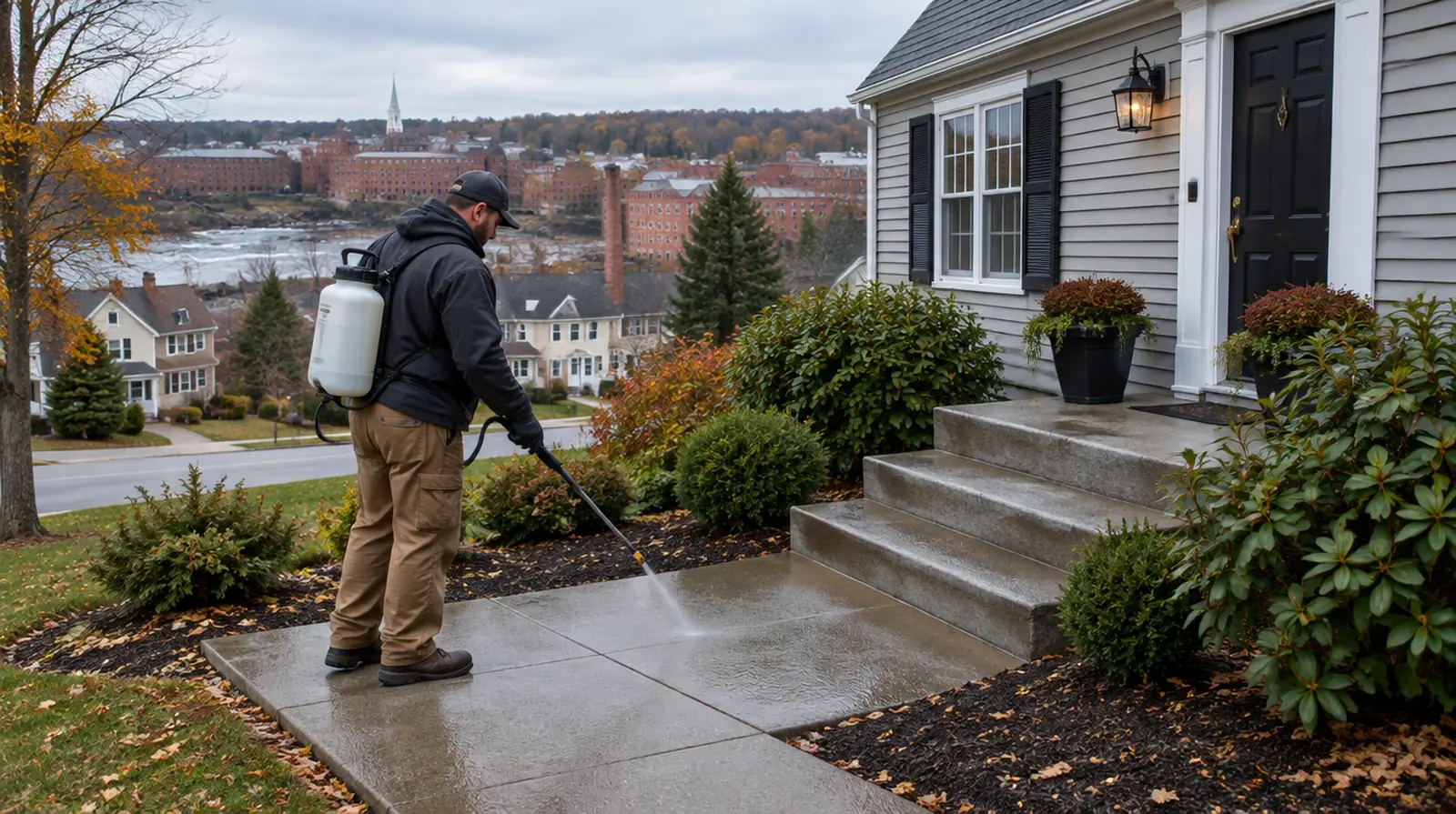
A sealer locks in whatever is on the surface, so cleaning comes first. We pressure-wash to remove dirt, algae and loose material. Oil and rust stains are treated with the right cleaners. Old, peeling sealer is stripped so the new product can penetrate or bond. The concrete then needs time to dry before we apply anything.
Repairs before sealing
Sealing works best on sound concrete. We fill cracks with a flexible sealant so water cannot run into them and freeze. Minor scaling can be patched with a resurfacing compound, and broken step edges can be rebuilt. Badly damaged slabs may need replacement by a concrete contractor, and we will tell you if that is the case rather than seal over a lost cause.
Patios and pool decks
Backyard patios often see furniture, grills, planters and plenty of foot traffic. A good sealer protects against grease, wine and pollen stains and brings out the color of stamped or colored concrete. Around pools, we use sealers with added grip so wet feet stay steady. Pool decks also need to resist chlorine and sunlight, which narrows the choice of products.
Granite and ledge settings
Many local yards feature granite steps, stone walls and exposed ledge alongside concrete. We mask and protect stone and plantings while we work. When concrete meets granite at a step or wall, we take care with the joint between them so water does not get trapped where the two materials meet.
When to seal
Late spring through early fall is the best time for outdoor sealing, when the concrete is dry and temperatures stay above freezing day and night. New concrete should cure for at least a month before sealing. Most penetrating sealers last several years, while film-forming sealers usually need a fresh coat every two to three years, depending on traffic and sun.
Winter tips
Even sealed concrete benefits from gentle treatment. Shovel early so snow does not pack into ice. Use calcium magnesium acetate or sand instead of rock salt when you can, and avoid fertilizers sold as ice melt, which contain ammonium compounds that attack concrete. Never use a metal ice chipper on the surface.
Book a sealing visit
Contact us to look at your steps, walk or patio. For the driveway, see our driveway coating service. If the concrete is indoors, a full epoxy system may be a better fit.
Garage and basement floors
A clear penetrating sealer can also be a budget-friendly step for a garage or basement floor that is not ready for a full coating. It will not hide stains or wear, but it slows salt damage and dusting. Many customers seal first and upgrade to a full resin system later, and the sealer can be ground away when that time comes.
Commercial walkways and entries
Building entrances, loading areas and sidewalks around offices and shops take heavy salt every winter. We seal these areas on weekends or after hours and can include crack filling and simple patching in the same visit, which helps property managers keep entries safe and tidy.
to seal your concrete.
Call (978) 723-4835 for a free estimate.