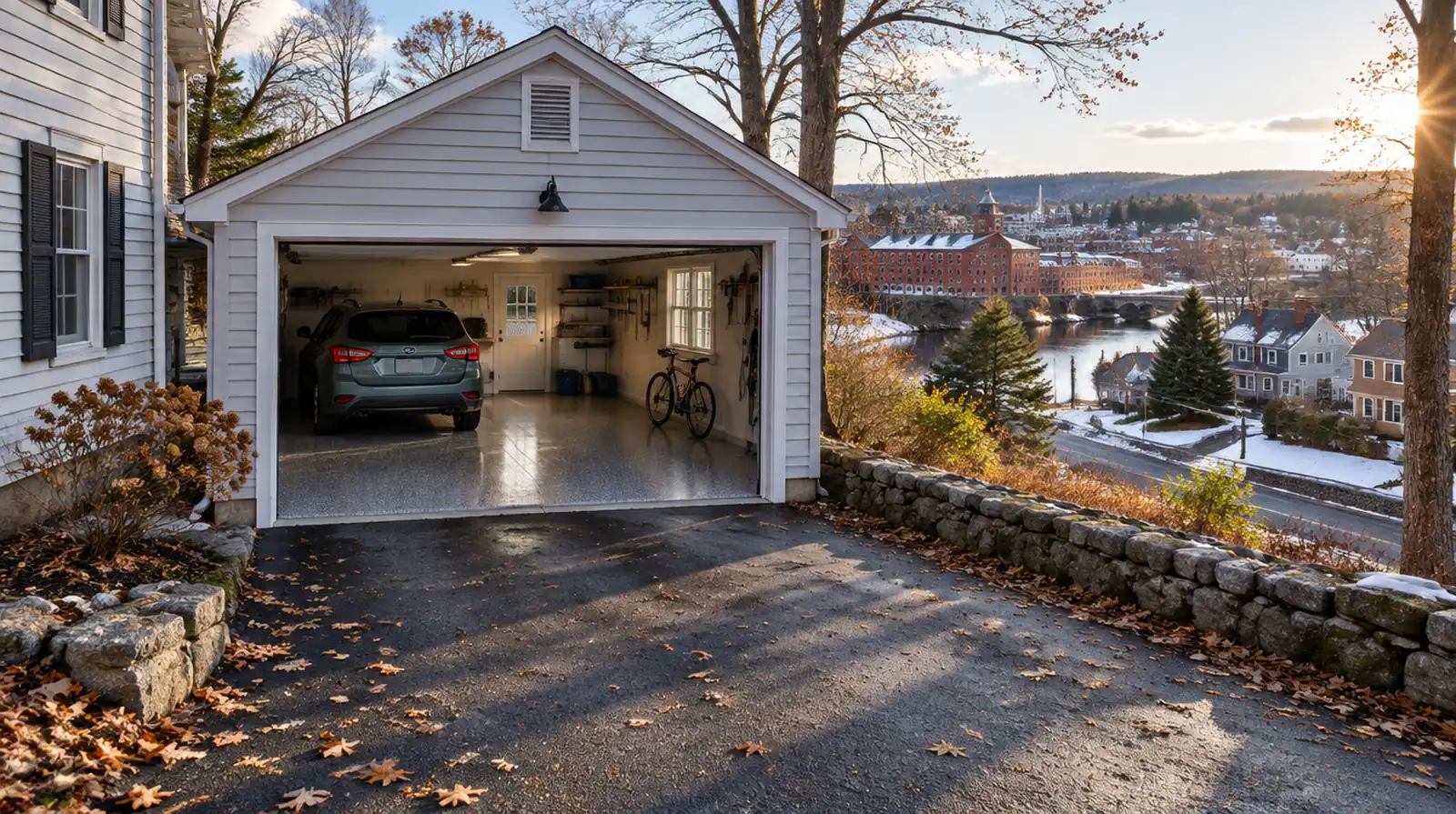
What polyaspartic is
Polyaspartic is a type of polyurea, a family of coatings that was first used on bridges and industrial steel. Compared with standard epoxy, it cures far faster, handles cold temperatures better and does not yellow in sunlight. It can be used as a full system on its own or as the clear top coat over an epoxy base. In most of our garage jobs we use it as a top coat, because it combines epoxy's strong bond and build with polyaspartic's toughness and speed.
Why it helps in our climate
Many garages here are unheated, and from October to April the slab can sit in the forties or colder. Standard epoxy cures very slowly at those temperatures and can develop amine blush, a greasy film that weakens the next coat. Polyaspartic keeps curing in much cooler conditions, which lets us schedule projects later in the fall and earlier in the spring. That is a big help for homeowners who want the work done before the first snow or right after the last one.
Faster return to service
Because it cures so quickly, a polyaspartic system can often be walked on the same day and driven on within a day or two. For families who need the garage for daily parking, or for businesses that cannot close for a week, that difference matters. We can often finish a standard two-car garage in a single long day, though older slabs with heavy repair work may still take two.
UV stability
Epoxy tends to turn amber when it gets direct sunlight. In a garage with the door open on summer afternoons, or a sunroom or porch, that yellowing can show within a year or two. Polyaspartic resists that change and stays clear. If your garage faces west or south, or you leave the door up while you work, a polyaspartic top coat is the safer choice.
Resistance to salt and chemicals
A polyaspartic top coat stands up well to road salt, brine, gasoline, oil, brake fluid and most household chemicals. Spills wipe off without staining as long as they are not left for days. It also resists hot-tire pickup, the problem where warm tires soften a coating and pull it off the floor. All of this makes it a strong match for garages that see a lot of winter driving.
Installation needs skill
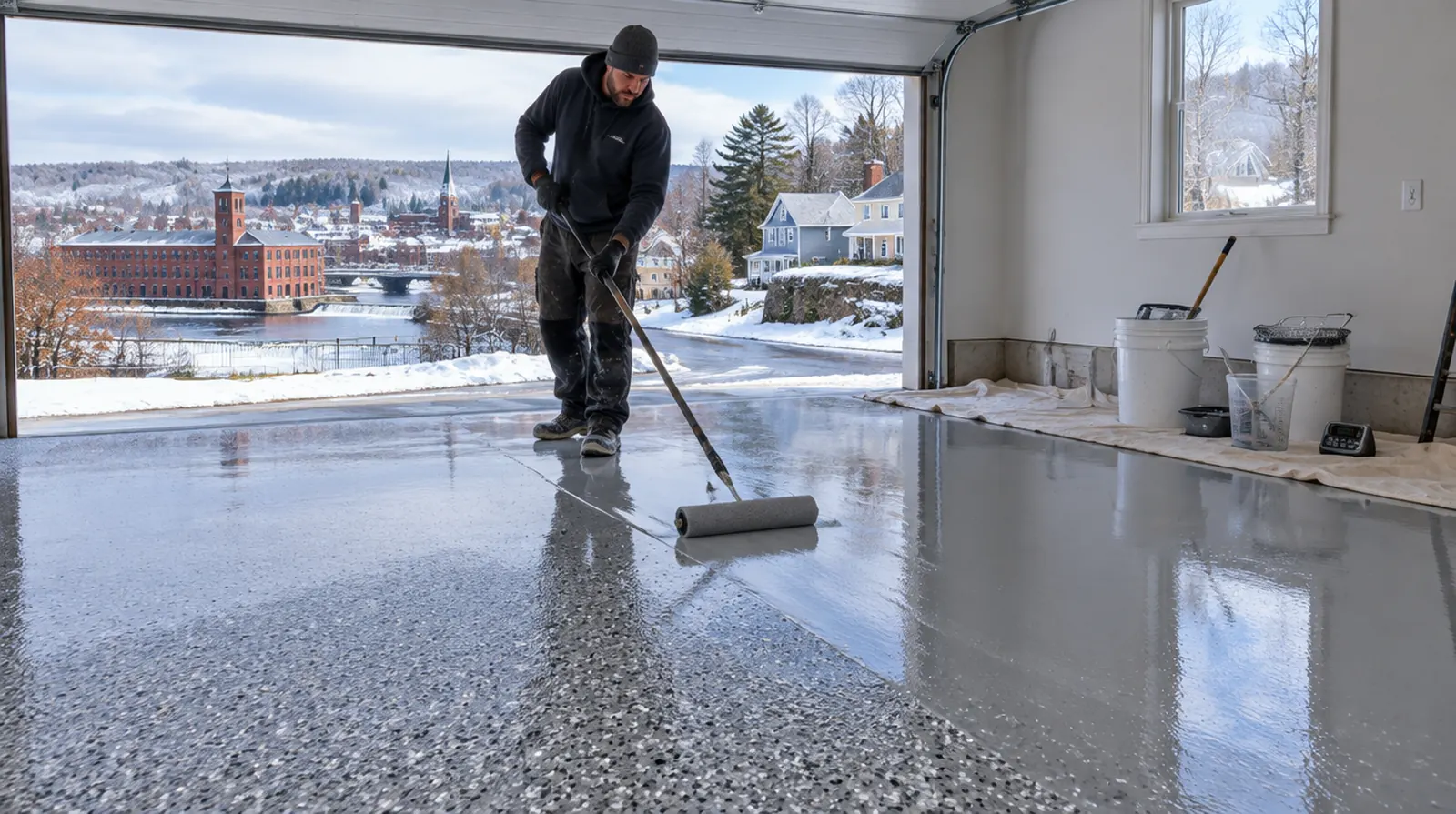
The same speed that makes polyaspartic useful also makes it demanding to install. Its working time can be as short as fifteen or twenty minutes, so the crew must mix in small batches, roll quickly and keep a wet edge. We plan each section of the floor in advance and adjust the product to the temperature and humidity on site. That attention is what gives an even, streak-free finish.
Preparation still matters
A quick-curing coat still needs a sound surface. Every polyaspartic job begins with diamond grinding, crack filling and pit repair. We check the moisture level, and if it is high we use a vapor-tolerant primer under the system. Skipping these steps would waste the advantages of a premium product.
Comparing costs
Polyaspartic materials cost more than standard epoxy, and the installation requires more skill. Even so, many customers find the fast turnaround and longer life worth it. Your written estimate will show the difference between an epoxy top coat and a polyaspartic one so you can decide with real numbers. Ask about pairing it with a flake broadcast or a full garage system.
Care
Clean a polyaspartic floor the same way you would any coated floor. Squeegee out meltwater, sweep or dust-mop weekly and wash now and then with a mild cleaner. It is tough, but a rubber mat under steel skid shoes and jack stands will still help protect the shine.
Good candidates for polyaspartic
It is a strong pick for busy households that cannot give up the garage for several days, for sun-facing garages, for detached garages with no heat and for small shops that need to reopen quickly. If your project fits one of those, ask us to price it both ways so you can compare the trade-offs side by side.
to book a fast-cure floor.
Call (978) 723-4835 for a free estimate.