What polishing involves
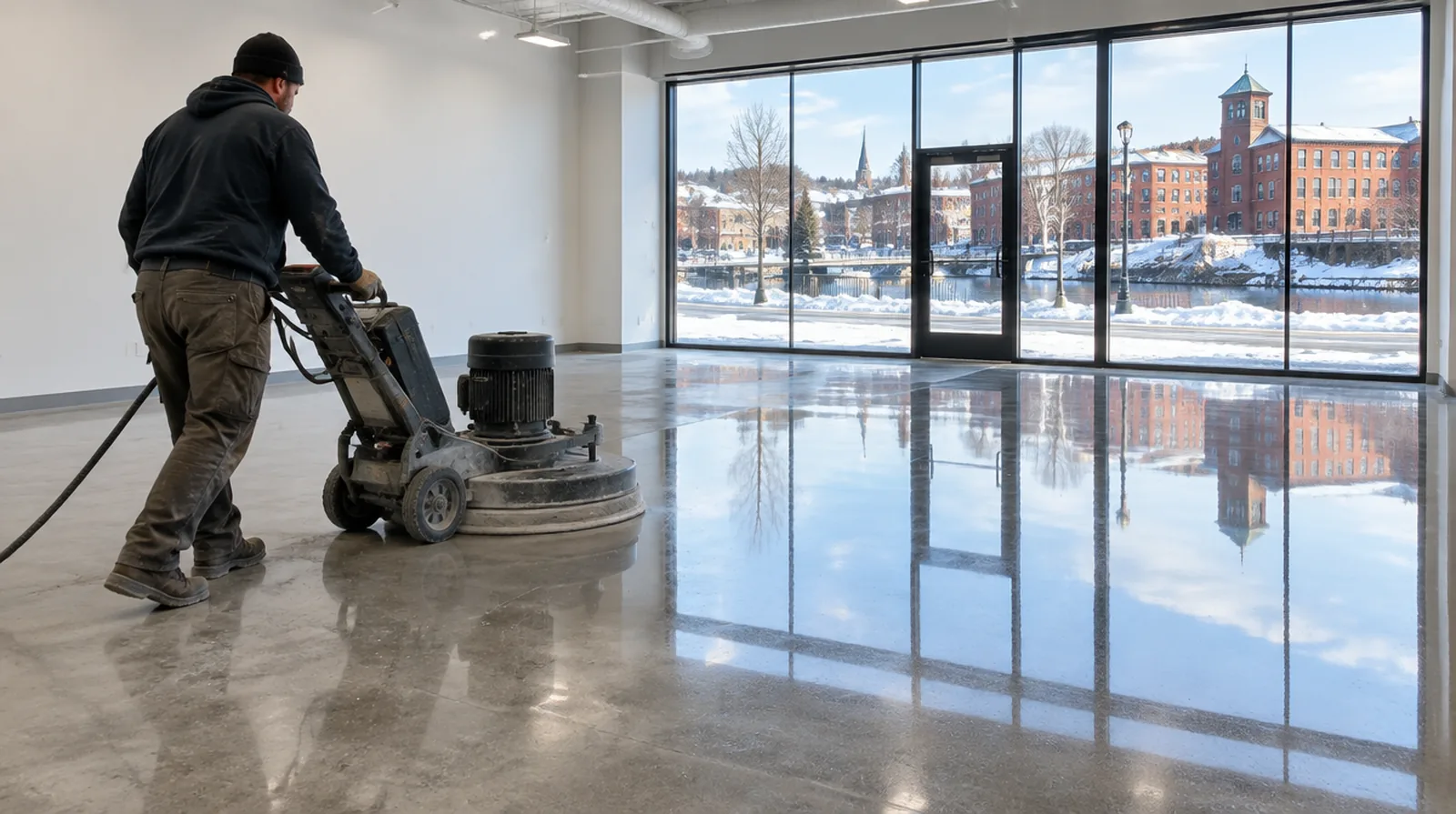
Polishing is a mechanical process, not a coating. We start with coarse diamond tooling to flatten the surface and remove old glue, paint and stains. Then we step through progressively finer diamonds, much like sanding wood with finer and finer paper. Along the way, we apply a chemical densifier that soaks into the concrete and hardens the surface from within. A guard or stain-resistant sealer goes on at the end. The finished floor can range from a soft satin to a high, mirror-like gloss, depending on how far we take the grind.
Choosing the level of exposure
- Cream finish: very light grinding that keeps the smooth top layer and shows little or no stone.
- Salt and pepper: a moderate grind that reveals fine sand and small specks of aggregate.
- Full aggregate: a deeper grind that exposes larger stones for a terrazzo-like look.
The right choice depends on the slab, the budget and the style you want. We often grind a small test area so you can see the result before committing.
Where polished concrete shines
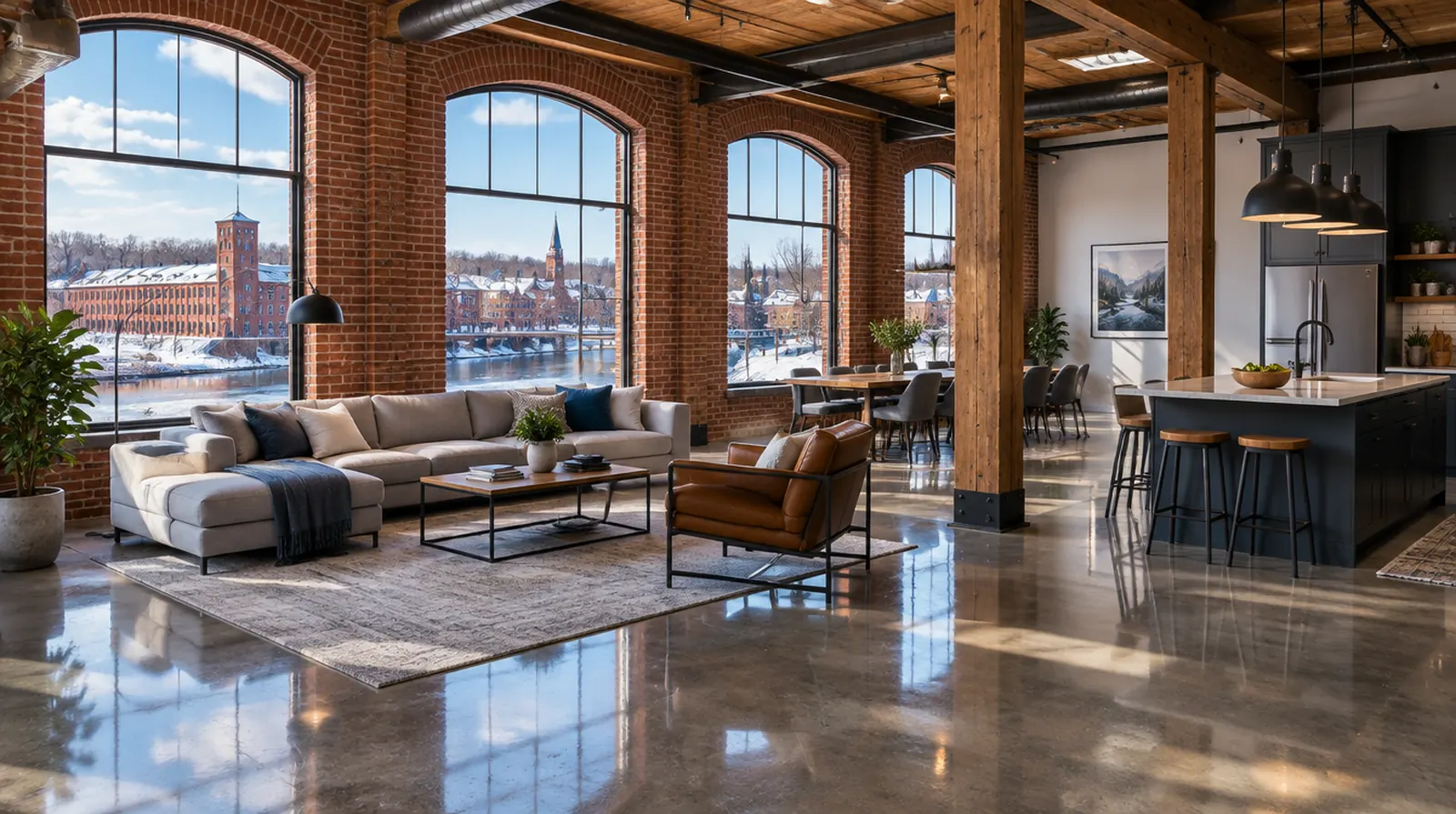
Polished floors are a natural match for the converted mill buildings that line the riverfront, where exposed brick and timber call for a floor with some industrial character. They also work well in office lobbies, retail stores, restaurants, showrooms, warehouses and modern homes with radiant heat. Because there is no coating to peel, they handle heavy foot traffic and rolling loads well.
Benefits for businesses
For a store or office, polished concrete brings a long service life with little upkeep. There is no wax to strip and no coating to replace on a schedule. Daily cleaning with an auto-scrubber or a damp mop keeps it bright, and the reflective surface can make a space feel lighter, which sometimes allows for fewer light fixtures. The densified surface also resists dusting, a common complaint with bare warehouse slabs.
Polished floors at home
Homeowners choose polished concrete for basements, mudrooms, kitchens and open living areas. It pairs very well with radiant floor heating, since the concrete holds and spreads warmth evenly. In a basement, a polished floor is a durable, clean alternative to carpet that will not trap moisture or odors. Area rugs can soften the look and feel in living spaces.
Dyes and accents
Polished concrete does not have to be gray. Water- or solvent-based dyes can add warm browns, deep charcoals or subtle blues. We can also cut in borders, logos or simple patterns. Dyes are applied during the polishing process so they become part of the surface rather than a layer that can wear off.
Limits to be aware of
Polishing shows the slab as it is. Cracks, patches and color variations remain visible, though we can fill cracks with a color-matched filler. Very soft, badly damaged or heavily contaminated slabs may not polish well, and an outdoor or garage slab exposed to road salt is usually better off with a coating. We are honest about these limits during the estimate.
Keeping it looking good
Sweep or dust-mop regularly to remove grit, which is the main thing that dulls a polished floor. Clean with a neutral cleaner and avoid acidic products like vinegar. Wipe up wine, coffee and oil spills promptly. In busy commercial spaces, a periodic burnishing visit can restore the shine without regrinding.
Next steps
Contact us to schedule a site visit, and we will look at the slab and talk through finish options. If polishing is not a good fit for your floor, we may suggest a metallic coating or a commercial resin system instead.
Older slabs and patched floors
Older buildings often have floors with patches, old adhesive and areas poured at different times. Polishing can bring these together into a floor with real character, where the history of the building shows in the surface. We test a section first so you can see how the patched areas look once they are ground and polished, and we can blend in dyes to soften strong color differences between pours.
New construction slabs are a different story. When a builder or architect plans for polishing before the concrete is poured, the mix, finishing and curing can be chosen to give a cleaner, more consistent result. We are glad to talk with contractors early in a project.
to polish your concrete.
Call (978) 723-4835 for a free estimate.