
What winter does to a driveway
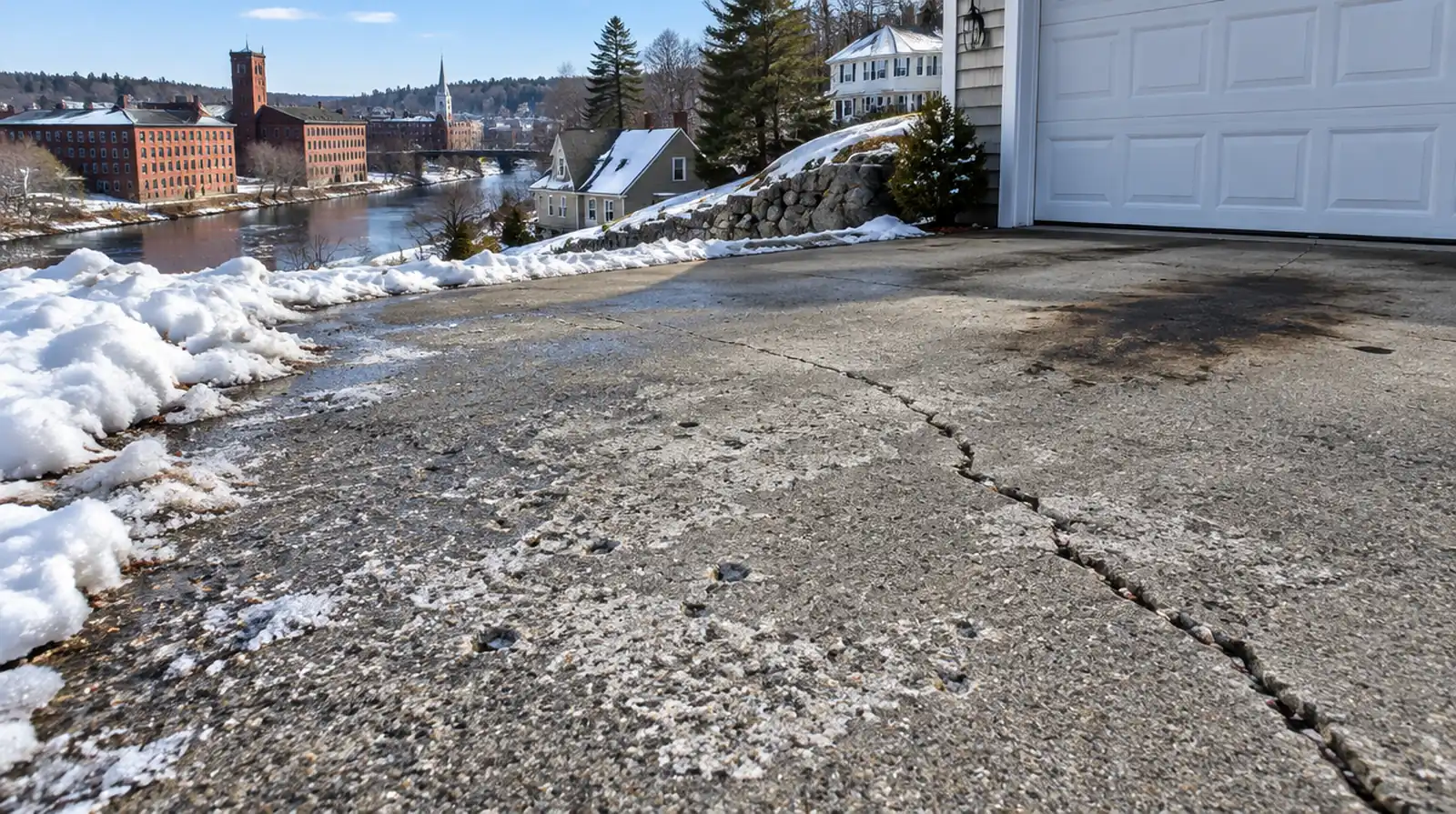
Driveways take more punishment than any other concrete around the house. Plows and shovels scrape the surface. Rock salt and brine drip off cars and pool in low spots. Water seeps into cracks and joints, freezes and pushes them wider. Over time the surface scales, the edges crumble and cracks spread. Frost heave can lift sections, especially where the soil holds water. Sealing will not fix a heaved or broken slab, but on sound concrete it slows the damage considerably.
Our process
- Inspection: we look for cracks, scaling, heaved sections and drainage problems.
- Cleaning: hot or cold pressure washing removes dirt, algae and loose surface material.
- Stain treatment: oil, rust and tire marks are treated so they do not show through.
- Crack repair: cracks and joints are cleaned and filled with flexible sealant.
- Sealing: a penetrating sealer is applied evenly so it soaks deep into the concrete.
Penetrating sealers for driveways
For driveways, we almost always recommend a penetrating silane or siloxane sealer. These products soak into the concrete and react to form a water-repellent barrier inside the pores. They do not form a film on top, so they will not peel, and they do not make the surface slippery. They also let water vapor escape from below, which matters on a slab sitting on damp soil. Most last several years before they need a new coat.
Why we avoid coatings on driveways
Some companies offer epoxy or thick acrylic coatings for driveways. In our climate, those often fail. They trap moisture, peel under plows and tires and become slippery when wet or icy. A penetrating sealer protects the concrete without those risks. If you want color, we can discuss stains or tinted sealers that work with the concrete rather than covering it.
Crack and joint repair
Cracks are where water gets in, so filling them is one of the most important steps. We clean out each crack, insert backer rod where it is deep and fill it with a flexible, UV-stable sealant that moves with the slab through the seasons. Control joints get the same treatment. Wide or shifting cracks may need more work, and we will point those out.
Aprons and garage transitions
The apron, where the driveway meets the garage, takes extra abuse from tires turning and slush dripping off cars. We pay special attention there, and if you are also having the garage floor coated, we plan a clean transition between the coated floor and the sealed driveway. That keeps meltwater from running back under the garage door seal.
Timing
We seal driveways from late spring to early fall, when the concrete is dry and the forecast shows no rain for a day. The driveway needs to stay clear of cars for about a day after sealing. We schedule around your routine and let you know exactly when you can park again.
Care between seals
Shovel promptly, use plastic shovel blades, choose gentler ice melts and keep gutters directed away from the slab. Rinse salt off in spring. Plan to reseal every few years, depending on how much sun and traffic the driveway gets.
Request an estimate
Contact us with photos of your driveway or schedule a visit. We often seal walks and steps at the same time; see our concrete sealing page. For the garage floor, take a look at our garage epoxy service.
Signs it is time to seal
A simple test is to splash a cup of water on the driveway. If it darkens and soaks in within a few minutes, the concrete is absorbing water and is due for sealing. If the water beads up, the existing sealer is still working. Other signs include new surface scaling, white salt marks that linger into summer and cracks that widen each spring.
New driveways
A newly poured driveway should cure for about a month before sealing, but sealing it before its first winter gives it the best possible start. If you just had a driveway installed, ask us to put it on the schedule so it is protected before the plows arrive.
to protect your driveway.
Call (978) 723-4835 for a free estimate.