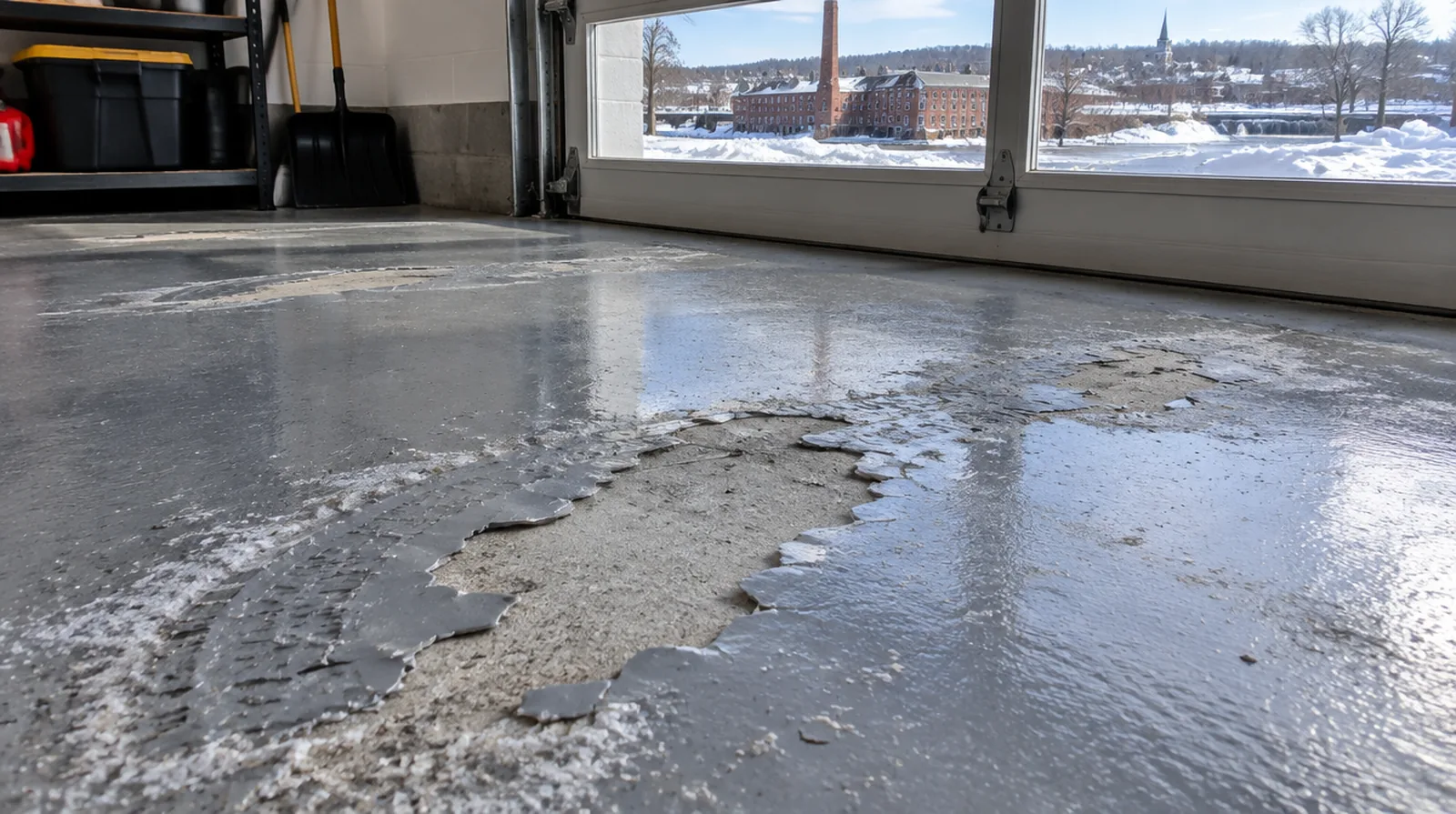
Common reasons floors fail
Most of the failing coatings we see share a few causes. The first is poor preparation, usually acid etching or no prep at all, which leaves the coating sitting on a weak surface. The second is a coating that was too thin, often a one-coat kit that never had the build to stand up to tires and salt. The third is moisture pushing up through the slab, which causes bubbles and lifting. The fourth is hot-tire pickup, where warm tires soften a weak coating and peel it away. Knowing the cause tells us how to fix the floor so the problem does not come back.
Our inspection
We start by looking closely at the floor. We check how well the remaining coating is attached by tapping, scraping and sometimes cutting test spots. We take moisture readings, look for patterns in the damage and ask about the history of the floor. Peeling in the tire lanes points to hot-tire pickup or a thin coat. Bubbles spread across the floor point to moisture. Flaking near the door points to salt and freeze-thaw damage underneath the coating.
Spot repair or full removal
When most of the coating is still firmly bonded and the failure is limited to a few areas, we can often grind out the bad spots, patch the concrete, feather the edges and recoat the whole floor. When the coating is loose in many places, the honest answer is full removal. We grind the old coating off completely, repair the slab and install a new system from the ground up. A partial fix over a failing base only delays the next round of peeling.
Repairing the concrete underneath
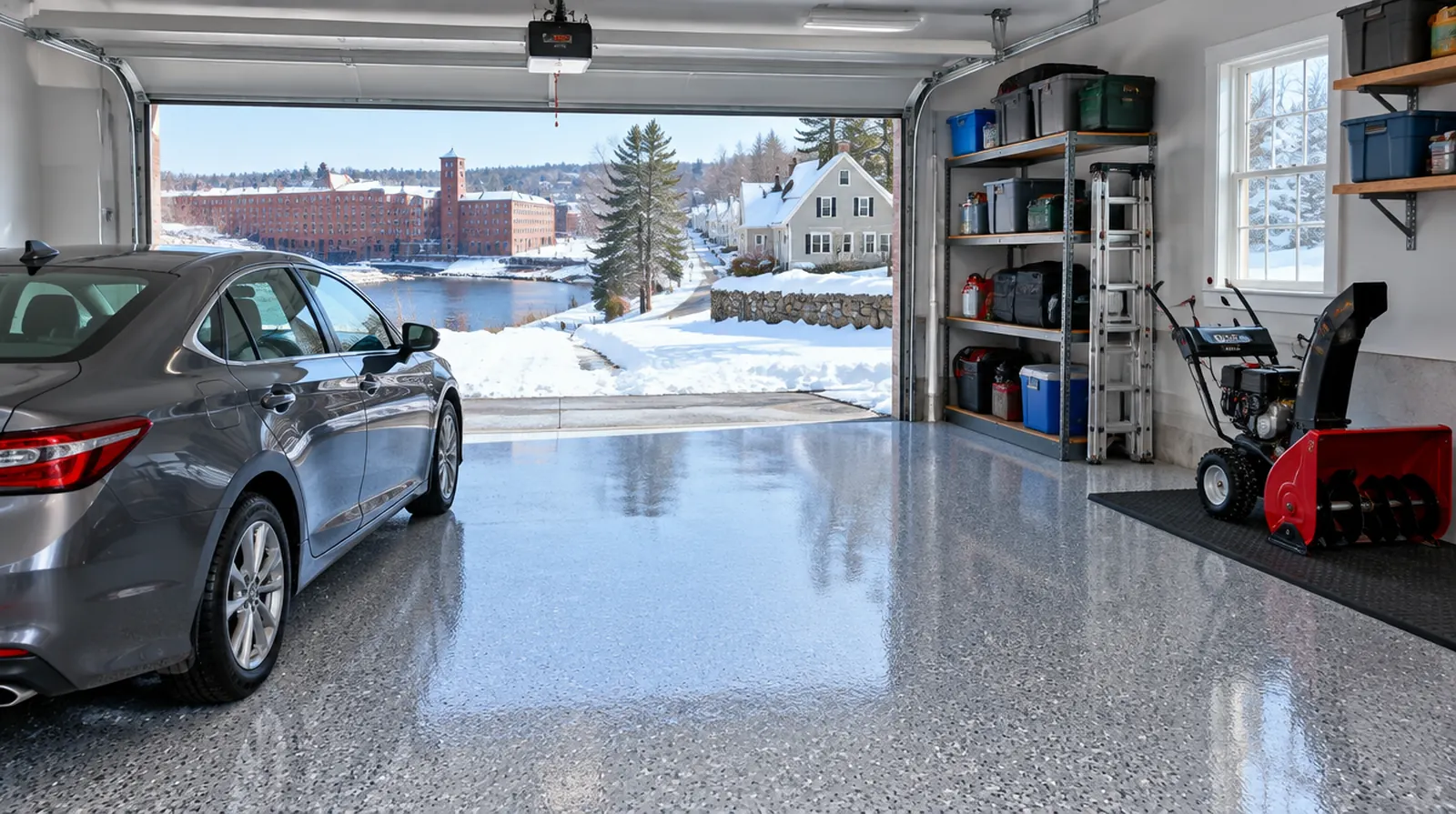
Once the old coating is gone, we usually find damage hidden beneath it. Salt can work its way under loose coating and scale the concrete. Cracks may have widened. We fill pits and scaling with resin mortar, repair cracks and rebuild broken slab edges. If moisture caused the failure, we use a moisture-mitigating primer. This is the step that separates a lasting repair from a cosmetic one.
Recoating worn floors
Not every floor needs a major repair. Some coatings are well bonded but dull, scratched or faded after years of use. In those cases, we can lightly sand the surface and apply a fresh top coat. This restores gloss and protection at a fraction of the cost of a new system. It is a good option for floors that are five to ten years old and still sound.
Commercial repairs
Businesses face their own wear patterns: forklift damage, chemical spills, impact from dropped parts and worn traffic lanes. We repair damaged sections, rebuild joints and recoat high-wear zones while keeping the rest of the facility running. Matching an older system can be tricky, so we discuss whether to blend the repair or recoat a larger area for a uniform look.
Avoiding future failures
After a repair, a few habits help a floor last. Put a mat under the snowblower and use pads under jack stands. Push meltwater out of the garage instead of letting it sit. Clean up chemical spills quickly. And when choosing any coating, ask the installer how they prepare the concrete. Grinding should be the answer.
Schedule an assessment
Send photos of the damaged floor or book a visit. We will tell you what went wrong and give you a written estimate with your options. If you are starting fresh, see our garage systems or fast-cure coatings.
Coatings from other installers
Many of the floors we repair were installed by someone else, sometimes years ago, and the homeowner has no record of the products used. That is fine. We test the existing coating for adhesion and compatibility, then pick a repair approach that will bond to it or, if needed, remove it. If you do have the original paperwork, bring it to the visit; it can save time.
Repairing around drains and doors
Failures often start at the edges, around a floor drain, at the garage door threshold or where the floor meets the step into the house. Water collects in those spots and works under the coating. We cut back to sound material, rebuild the edge and seal it carefully so water has no way back in.
to fix a failing floor.
Call (978) 723-4835 for a free estimate.