How a bare floor wears out
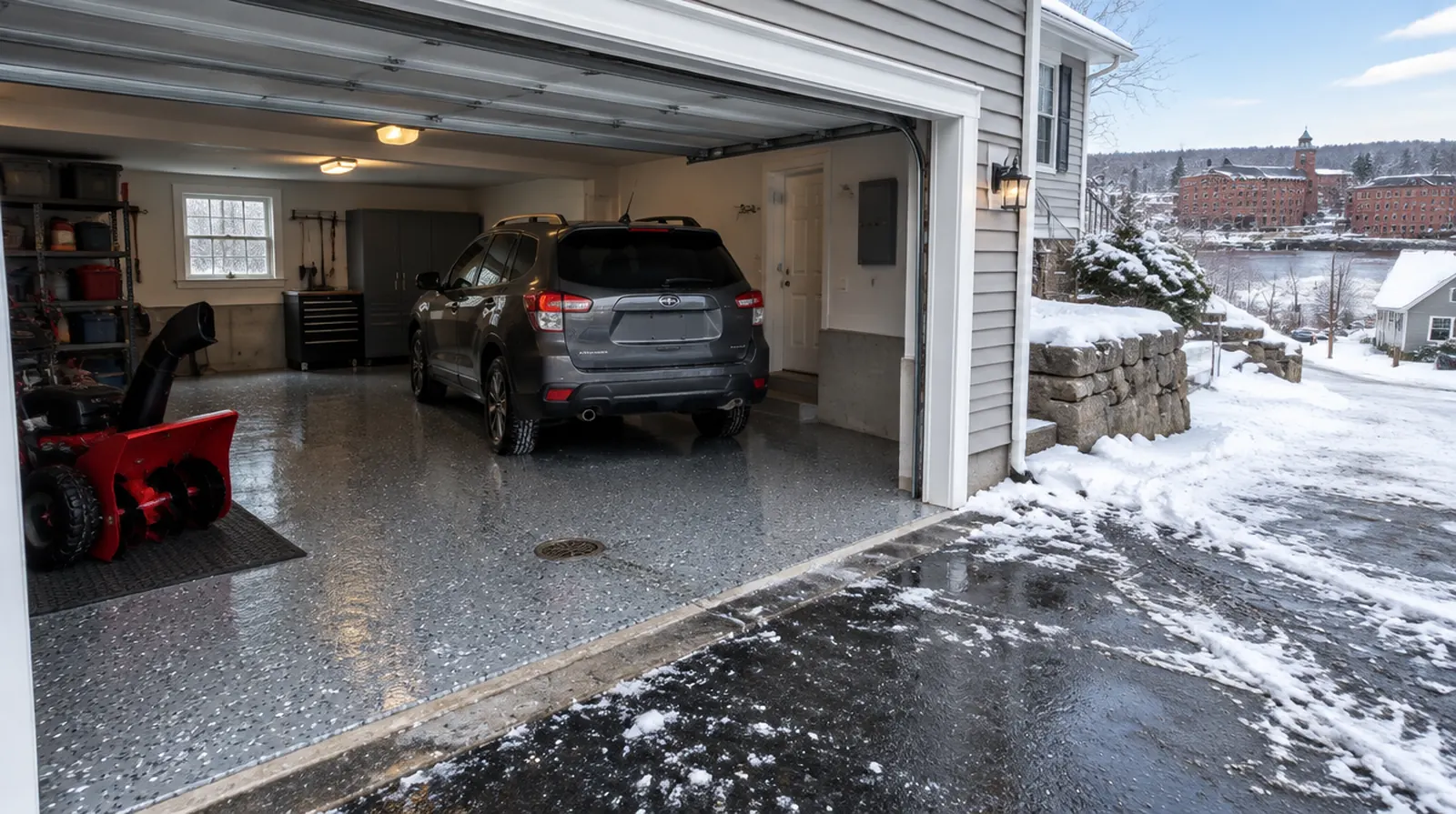
Think about an ordinary February week. Each evening the car rolls in with a crust of gray slush packed into the wheel wells. It drops onto the floor, melts and runs to the lowest spot, which in many raised ranch and tuck-under garages is the drain or the corner by the stairs. The salty water seeps into the surface. Overnight the garage cools down, the water inside the concrete freezes and the top layer gets pushed apart a tiny bit. Repeat that a few hundred times over several winters and the floor starts to flake, pit and stain. Throw in oil drips, a spilled jug of windshield washer fluid and sand from boots, and the slab looks decades older than it is. A coating stops the cycle by keeping water and salt at the surface, where you can sweep or squeegee them away.
We grind instead of etching
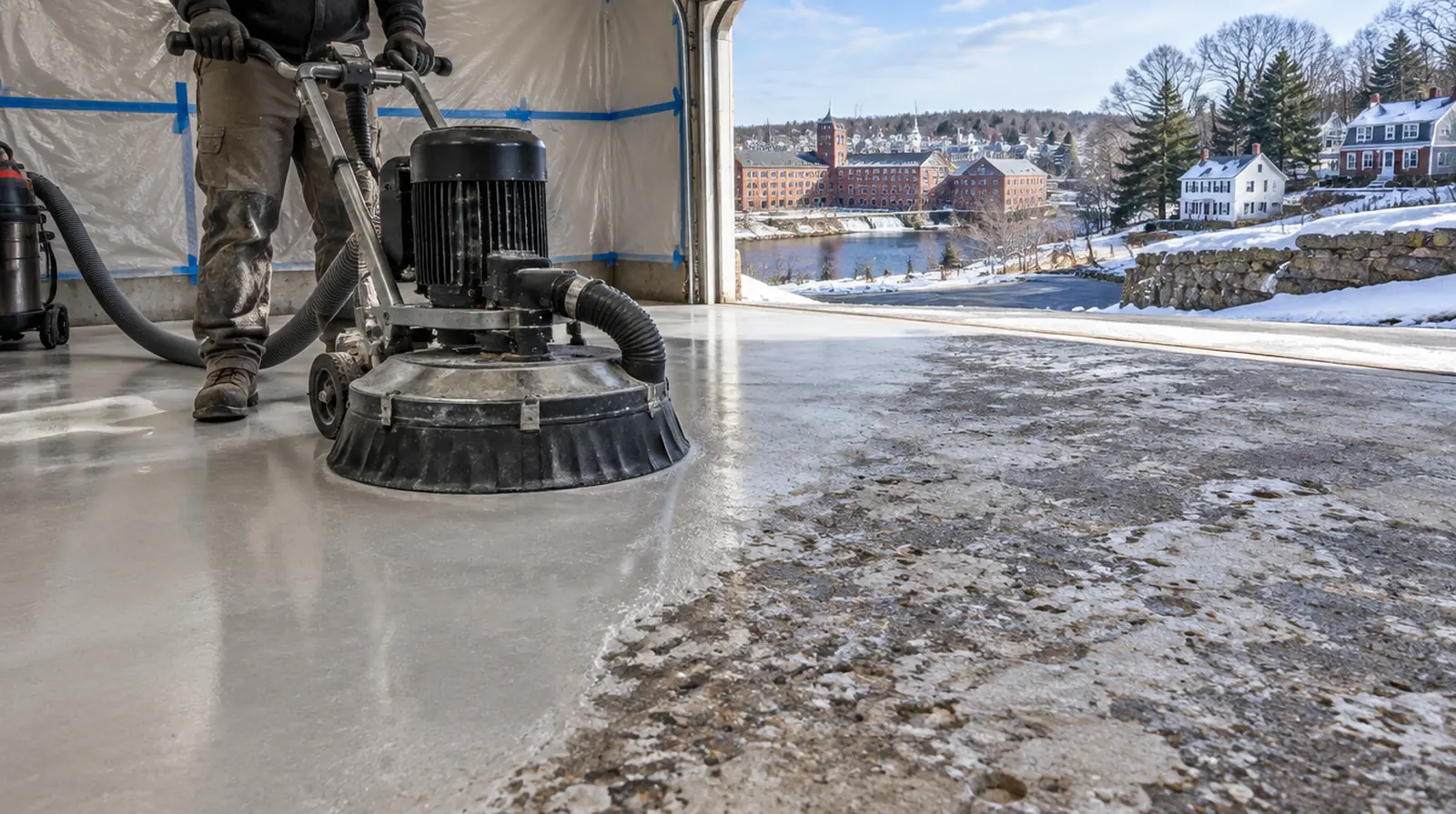
Muriatic acid etching is quick and cheap, and that is about all it has going for it. It leaves a patchy surface, it does not remove sealers or paint and any residue left behind can stop a primer from bonding. Every garage we coat gets ground with diamond tooling instead. The grinder cuts off the weak top layer, curing compound and old finishes, and leaves an even profile that primer can soak into. All of our grinders are connected to HEPA vacuums, and we tape off doors and walls so dust stays in the garage and out of the kitchen.
Repairing salt and frost damage
Grinding nearly always uncovers more damage than was visible. Pits and scaled patches get filled with a resin mortar and troweled flat so they do not show through the finish. Cracks are opened with a saw or grinder and filled, using a flexible filler on any crack that still shifts with the frost. The front lip of the slab, where the door seal rests and ice builds up, is frequently chipped or broken. We rebuild it so the new floor ends at a crisp, sealed line. Deep oil spots are degreased and treated so they cannot push up through the coating later.
The system, coat by coat
- Primer: a thin, penetrating epoxy that soaks into the freshly ground surface. Damp slabs get a moisture-tolerant version.
- Base coat: a pigmented, high-build layer that sets the color and adds most of the thickness.
- Broadcast: vinyl flake to full coverage for a textured look, partial for a lighter pattern or none for a solid color.
- Top coat: a clear polyaspartic or urethane layer that resists salt, chemicals, sunlight and hot tires.
Thickness makes a real difference. A thin single coat from a box wears through in the tire lanes within a couple of winters. A full system is many times thicker and holds up far longer.
Garages that drain to the middle
Plenty of local garages have a center drain or a slab that slopes toward the stairs. We keep those slopes intact so water still runs where it should, and we bring the coating neatly into the drain body rather than stopping short. If a drain grate is rusted or loose, we can reset it before coating so the area around it stays sealed. For garages with no drain, we can talk about adding a slight texture near the door so slush is easier to push out.
Trucks, snowblowers and hot tires
Many garages here hold a full-size pickup, a snowblower with steel skid shoes and often a trailer, a boat or a pile of firewood. Steel shoes scratch, heavy trucks flex weak floors and tires coming off the highway in summer can lift soft coatings. We choose top coats rated for abrasion and hot-tire pickup and suggest a rubber mat under the snowblower. That small habit keeps the finish looking new for years.
Grip and safety
A glossy floor covered in meltwater can be slippery, which matters a lot when you walk across it in boots. A full flake broadcast adds natural texture, and we can mix fine aluminum oxide grit into the top coat for extra traction. We often add a little more grit in the first few feet inside the door, where most of the slush lands. You decide the balance between smooth and grippy, and you can test samples underfoot at the estimate.
Timing and cure
Most two-car garages take one or two days. You can walk on the floor within hours to a day, and vehicles usually come back after one to three days, depending on the temperature and the top coat. In cold months we use heaters and faster-curing products. If you need the garage back by a certain date, tell us and we will schedule around it.
Pricing
The cost depends on floor size, how much repair is needed, moisture conditions and the system you pick. A newer slab with light wear costs less than an older floor with heavy pitting. Your estimate lists each step so you can compare it line by line with other quotes. Ask about flake blends or fast-cure top coats during the visit.
to coat your garage floor.
Call (978) 723-4835 for a free estimate.